
Navigating the vast landscape of musical styles and genres requires more than just knowing the names of bands; it demands a deep understanding of the structural, theoretical, and sonic elements that define them. Whether you are a songwriter looking to incorporate Baroque counterpoint into heavy metal or a producer trying to blend industrial beats with organic instruments, mastering these nuances is key to artistic growth.
This resource serves as a comprehensive guide to understanding the mechanics behind the music. We move beyond surface-level definitions to explore the compositional choices, arrangement strategies, and performance techniques that distinguish one genre from another, helping you find your unique voice within—or between—these styles.
Progressive rock and art rock are defined by their ambition. Writing in these genres often involves breaking away from the standard verse-chorus structure. A common challenge for musicians is maintaining listener engagement during extended pieces. To successfully structure a 10-minute song or a 15-minute epic, one must treat the composition like a narrative arc, ensuring that instrumental sections drive the story forward rather than stalling it.
Compositionally, this often involves stepping outside of 4/4 time. Using 7/8 time signatures or polyrhythms can add a sense of urgency and complexity, but the key is to make these rhythms feel natural rather than calculated. Furthermore, for those attempting the grandeur of a Rock Opera or a concept album, coherence is vital. Giving characters unique musical motifs and ensuring seamless transitions between tracks are essential techniques to unify the storytelling.
Integrating orchestral elements into a rock context is a delicate balancing act. The « WallofSound » trap is a common pitfall where adding more instruments actually reduces the track’s impact. The primary challenge lies in the frequency spectrum; for instance, a cello section often competes directly with distorted rhythm guitars.
In genres like Psychedelic Rock, Industrial, and Noise, the texture of the sound is often as important as the melody itself. Creating immersive soundscapes requires a mastery of signal flow and effects.
Transporting the listener requires more than just reverb. It involves the strategic ordering of phaser, delay, and reverb pedals to create depth without muddiness. Understanding the difference between analog warmth and digital clarity allows producers to choose the right texture for the mood. Additionally, techniques like hard panning can create disorienting but captivating experiences for headphone users.
On the harsher end of the spectrum, Industrial music often blends organic and synthetic elements. Turning metal clanging sounds into playable drum kits or processing vocals with bitcrushing can add a menacing character to a track. In Noise music, the line between random chaos and intentional art is drawn by structure and control. Managing feedback loops and structuring a noise set to have a climax are skills that prevent the performance from becoming monotonous static.
Modern genres often borrow heavily from the past. Surprisingly, the chord progressions found in the works of Bach are frequently the foundation of heavy metal solos. Applying classical counterpoint and proper voice leading can make rock chord progressions sound significantly smoother and more sophisticated. Even Baroque ornaments like trills can add a unique flair to guitar solos.
Similarly, Jazz Fusion bridges the gap between rock power and jazz harmony. Musicians looking to enter this genre must navigate the choice between Dorian and Mixolydian modes and decide on the right gear, such as the versatility of a Strat versus a Hollowbody. The goal is to blend technique with feel, ensuring that high-energy fusion doesn’t devolve into « boringbackgroundmusic » or aimless soloing.
Regardless of the genre, the live experience relies on communication and dynamics. Jamming effectively with other musicians is a skill that prevents a performance from turning into a train wreck. This involves non-verbal cues, such as eye contact and head nods, to signal chord changes or the end of a jam.
Dynamics are equally important; often, bringing the volume down is more powerful than playing louder. For bands playing complex music, reading the room is essential—knowing when to place the « 11O’Clocknumber » or when to cut a solo short can determine the success of the show.

Contrary to the ‘just be authentic’ myth, a timeless folk song is a masterclass in craft. The most resonant pieces aren’t born from pure, unfiltered emotion, but from the deliberate shaping of musical and lyrical structures. It’s about building a…
Lire la suite
In summary: Treat your entire signal chain—mixer included—not as a processor, but as a self-generating instrument capable of controlled chaos. Embrace sonic detritus like feedback, hiss, and distortion as primary compositional elements, not as flaws to be removed. Structure your…
Lire la suite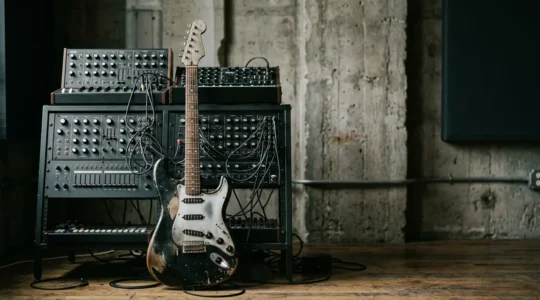
The brutal fusion of rock and industrial music is not a chaotic battle for loudness; it is a calculated act of sonic architecture where every sound is either a load-bearing wall or a wrecking ball. Effective industrial production relies on…
Lire la suite
The secret to authentic « Baroque Pop » is not simply adding a harpsichord sound; it’s adopting the compositional mindset of the 17th century. Effective integration involves translating principles like counterpoint and functional ornamentation into the language of modern rock instruments. Avoiding…
Lire la suite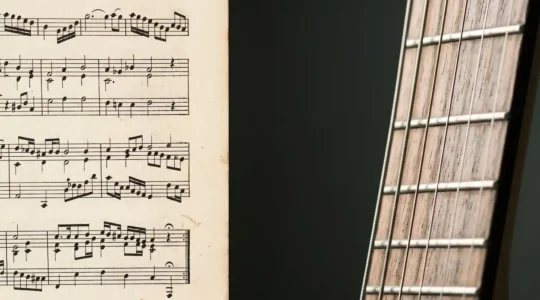
Forget the myth that symphonic rock is just about adding a string section. The real key to depth and sophistication lies in applying the structural discipline of classical counterpoint to your core rock instruments. This guide reveals how to treat…
Lire la suite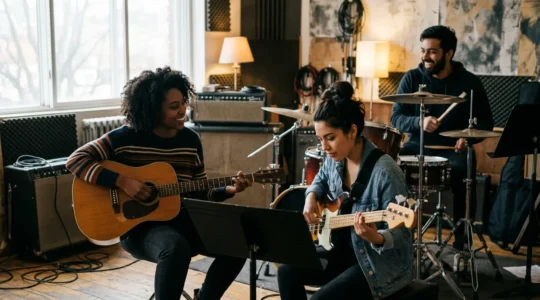
Contrary to popular belief, a great jam session isn’t about flawless technique or knowing every scale; it’s about mastering the unspoken language of musical conversation. Effective jamming relies on non-verbal cues and active listening, not just technical skill. Using dynamics…
Lire la suite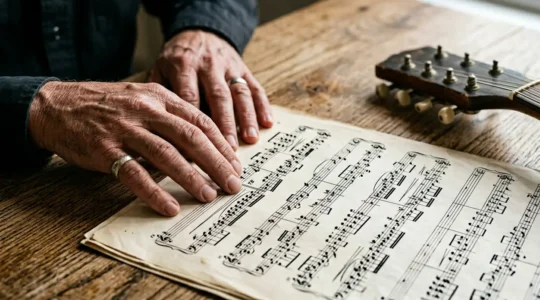
The secret to enjoying fusion isn’t complex music theory; it’s learning to feel the music physically, just like you would with a great rock riff. Fusion’s complexity is a source of energy, creating a powerful « tension and release » that rock…
Lire la suite
The key to a powerful rock opera isn’t a complex plot, but a solid narrative architecture where music drives the story. This means using musical motifs to define characters and treating song placement as a dramatic, not just musical, decision….
Lire la suite
Successfully integrating avant-garde ideas into rock hinges not on arbitrary weirdness, but on the strategic framing of novelty to guide the listener’s experience. Radical experimentation must be balanced with « emotional anchors »—familiar melodic, rhythmic, or lyrical elements that ground the audience….
Lire la suite
Most believe psychedelic music is made by simply adding layers of delay and reverb. The reality is that creating a truly transportive sonic experience isn’t about random effects, but about the intentional manipulation of psychoacoustic principles. This guide delves into…
Lire la suite