
Vinyl is far more than a nostalgic artifact; it is a ritual that demands active engagement. For the audiophile and the dedicated collector, the experience of a cult album goes beyond the music itself—it extends to the pressing quality, the physical condition of the media, and the intentional narrative structure designed by the artist. Understanding these elements transforms a casual listener into a true connoisseur.
Navigating the world of analog audio can be intimidating. Between deciphering matrix numbers in the dead wax and calibrating a delicate tonearm, the learning curve is steep. This resource breaks down the essential pillars of vinyl culture, from the technicalities of high-fidelity playback to the artistic nuances of track sequencing, ensuring your collection retains both its sonic and monetary value.
Building a valuable collection requires distinct skills: the ability to grade condition accurately and the knowledge to identify superior pressings. The marketplace is flooded with hype, making it crucial to distinguish between a rare gem and a common reissue.
One of the most contentious aspects of collecting is the disparity in grading. A record listed as « VeryGoodPlus » (VG+) can sound pristine from one seller but suffer from surface noise from another. Visual grading often fails to account for groove wear caused by heavy ceramic cartridges used in decades past. Learning to inspect the surface for graying grooves or hairline scratches is essential before investing in expensive cult classics.
A common misconception is that heavier vinyl equates to better sound. While 180g records feel substantial, the weight does not guarantee audio fidelity. Often, the mastering source matters more. An original pressing cut from analog tape often sounds more dynamic than a modern reissue cut from a digital file, even if the latter is on heavy vinyl. Identifying these sources distinguishes a serious collection from a generic one.
Even the rarest cult album will sound flat if the playback equipment is poorly maintained or improperly set up. The relationship between the stylus and the groove is a microscopic physical interaction that requires precision.
Many collectors unknowingly damage their records through improper tracking force. If the weight is too low, the stylus bounces, damaging the groove walls; if too high, it gouges them. Balancing the tonearm counterweight and setting the anti-skate is not optional—it is a requirement to prevent inner groove distortion, where the sound becomes fuzzy as the needle approaches the center of the record.
Preservation is key to longevity. Dust acts as an abrasive that grinds down high frequencies every time a record is played. However, cleaning methods vary widely:
Why do some albums sound quiet but explode with energy when the volume is turned up? This is the paradox of dynamic range. Audiophile pressings often eschew the « loudnesswar » techniques, preserving the difference between the softest and loudest passages. This results in a punchy, realistic soundstage on high-end systems.
Furthermore, technical decisions like cutting speed play a role. A 45 RPM cut allows the groove to be stretched out over a longer distance per second, providing higher resolution and better treble response than the standard 33 RPM, though it requires more flipping. Experienced collectors also look to the dead wax—the runout groove area—for signatures of legendary mastering engineers, which act as a seal of audio quality.
Beyond the physical medium, the cult status of an album often relies on its sequencing. In the streaming era, the art of the tracklist is often lost, but on vinyl, it is immutable.
Great albums are constructed with a narrative arc. The first 30 seconds of the opening track serve as the hook, determining if the listener commits to the journey. Artists use techniques like changing keys between tracks or utilizing short interludes to cleanse the listener’s palate between heavy, complex songs. This subconscious manipulation keeps the listener engaged from start to finish.
The physical limitations of vinyl—specifically the side split—force a natural intermission. Artists often structure albums to have a distinct « SideA » and « SideB » identity, placing an experimental track or a somber ballad at the end of a side to let the mood linger while the listener flips the record. Packaging elements like gatefolds and inserts further enhance this concept, turning the act of listening into an immersive tactile experience that digital formats cannot replicate.
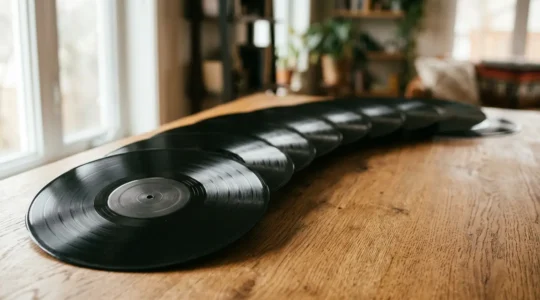
The most powerful albums are not collections of songs, but unified narrative experiences crafted through deliberate sequencing. Track sequencing is an act of emotional architecture, using subconscious cues like key changes and transitions to guide the listener. The physical format…
Lire la suite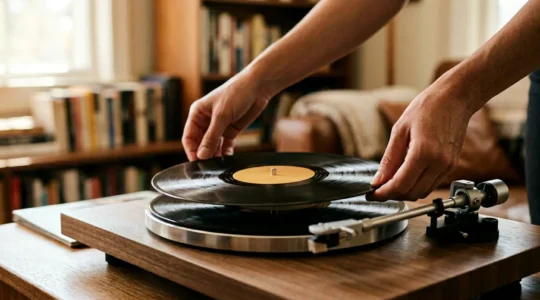
Contrary to the vague notion of vinyl’s « warmth, » the format’s power lies in its physical demands. The rituals of handling, cleaning, and playback aren’t chores; they are the very actions that preserve the mechanical integrity of the groove. This forced…
Lire la suite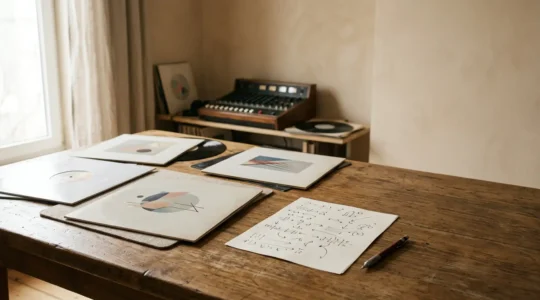
The perfect album sequence isn’t just art; it’s a strategic weapon to combat low listener retention and master algorithmic discovery in the streaming age. The opening track’s first 30 seconds are critical for signaling quality to streaming algorithms and preventing…
Lire la suite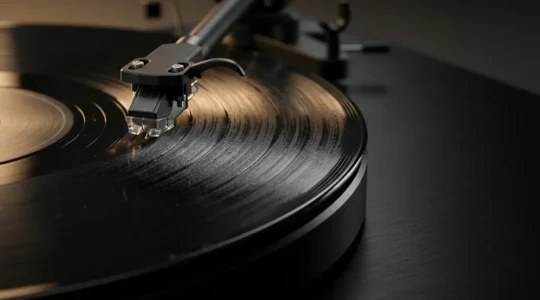
The sonic superiority of a vinyl record isn’t determined by its weight or hype, but by the integrity of its dynamic range, preserved from the original master recording to the physical groove. True analog and high-resolution sourced pressings retain transient…
Lire la suite
Building a lasting vinyl collection isn’t about accumulating popular records; it’s about becoming a steward of a physical medium, mastering its nuances to protect both its sound and its value. Grading like « VG+ » is subjective; its meaning changes dramatically based…
Lire la suite