
Rock is not just about attitude or volume; it is a complex alchemy between the physics of sound, technical precision, and the careful choice of equipment. Whether you are a guitarist seeking infinite sustain, a drummer looking for projection, or a sound engineer aiming to capture the raw energy of a band, understanding the interactions between instruments is fundamental.
This section explores in depth the mechanisms that make a rock track work, from microphone selection to tape recorder calibration, including frequency management on stage. The goal is to provide you with the keys to shape your own sonic identity without getting lost in technological myths.
The guitar is often the face of rock, but achieving a sound that « cuts through » the mix without becoming harsh requires more than simply turning up the gain. The quest for the perfect tone begins with understanding the signal chain.
A common mistake is overusing the gain knob, which ruins note definition, especially during fast riffs. The difference between natural tube saturation and digital distortion lies in dynamic response: a tube amp reacts to pick attack, offering a pleasing natural compression. For lead tones, stacking an overdrive pedal on a saturated channel allows you to achieve a massive sound while maintaining clarity, unlike a single distortion source pushed to the extreme.
Beyond equipment, it is the musician’s hands that make the difference. A memorable solo tells a story rather than chaining scales together. Here are some key technical pillars to master:
A solid rhythm section is what transforms a sequence of chords into a track that makes people tap their feet. The relationship between bass and drums—especially between the kick drum and the bass—is the engine of rock.
The ideal rock drum sound combines projection and control. The choice between coated heads (warmer) or clear heads (more attack) depends on the desired durability and playing style. A crucial point is tuning: the goal is often to minimize unpleasant overtones (« ring ») while retaining body. Additionally, the use of ghost notes adds funk and feel to straight rhythms, creating a more lively groove.
To create an unshakable foundation, the drummer and bassist must « lock in » together. Hitting the kick drum exactly at the same time as the bass note increases the perceived power for the listener. It is also a matter of frequencies: one must avoid EQ mistakes in the low-mid range that create conflict between bass and guitars, resulting in a muddy mix.
Integrating keyboards into a mix filled with distorted guitars is a challenge in both arrangement and equalization. Vintage instruments, or their modern emulations, bring an essential texture.
The best sound in the world is useless if the gear fails in the middle of a concert. Building a reliable touring rig (fail-safe) is an absolute priority for musicians on the road.
Faulty cables are the leading cause of signal loss and hum on stage. Investing in quality cabling is more important than buying a new pedal. Likewise, choosing between a voltage regulator and a simple power strip can save your amplifier in venues with questionable electrical installations.
Using in-ear monitoring systems (IEMs) requires precise mixing to hear the click without masking the guitars. Proper monitor management not only helps you play more accurately but also protects your hearing from the high sound levels typical of rock.
In the studio, the goal is often to capture the warmth of analog while benefiting from the flexibility of digital. Classic techniques are making a strong comeback to give character to modern productions.
Pushing input levels on magnetic tape creates a pleasant harmonic saturation that « glues » the elements of the mix together. Even in a home studio, understanding how to calibrate a machine or use a tape simulator helps avoid an overly sterile sound. Tape hiss can even be embraced as a texture, as long as it does not become distracting.
Instead of relying solely on digital reverbs, techniques such as tape echo (slapback of 50ms to 100ms for rockabilly) or recording drums in stairwells (Bonham style) bring a unique physical dimension. During mixing, it is often better to commit to EQ decisions during tracking rather than postponing everything to the mixing stage, forcing more decisive and creative artistic choices.

In summary: Treat the mixing desk not as a corrective tool, but as a playable, rhythmic instrument. Use manual fader riding to add human emotion and dynamics that compression can’t replicate. Employ aux sends and mutes as percussive accents to…
Lire la suite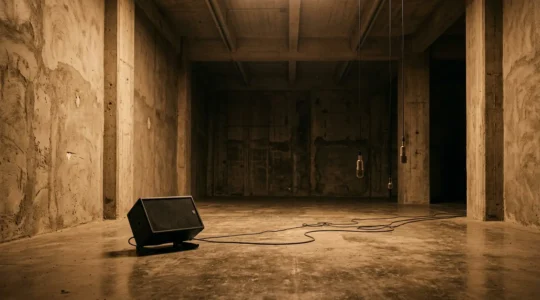
Authentic ’60s sound isn’t found in a plugin; it’s built by physically manipulating space and mechanics. The key is not digital emulation but understanding the « acoustic footprint » of real-world objects like metal sheets, springs, and stairwells. Iconic effects like plate…
Lire la suite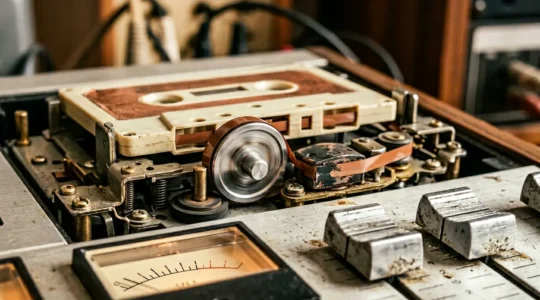
The secret to a great 4-track demo isn’t better gear; it’s a mental shift: you must learn to perform the production itself. Commit to arrangements and EQ decisions destructively, shaping the sound on the way to tape. Use track bouncing…
Lire la suite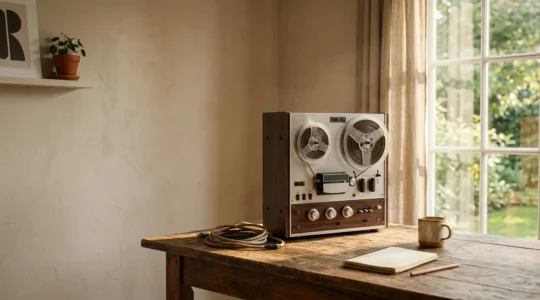
Contrary to popular belief, analog « warmth » isn’t a single effect you add; it’s the byproduct of a physical process and a disciplined workflow that digital tools can only approximate. Tape saturation adds musical harmonic complexity, it doesn’t just create distortion….
Lire la suite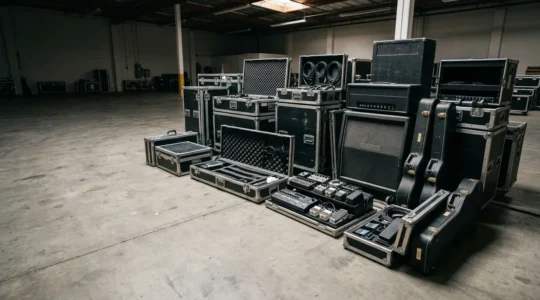
In summary: Building a reliable rig is less about expensive gear and more about systematically eliminating every potential point of failure. Power is the most overlooked risk; the right protection for the venue type is non-negotiable. Preventive maintenance on high-stress…
Lire la suite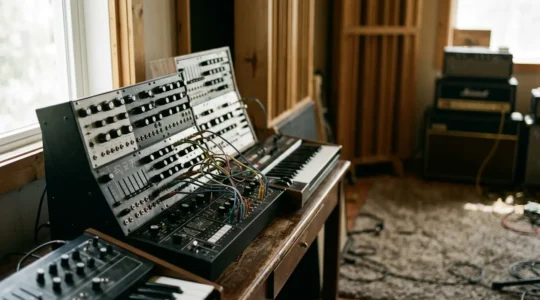
In summary: Stop fighting for volume; instead, engineer your synth’s unique space in the mix through precise spectral and temporal design. The punch of a synth isn’t just its attack speed, but its micro-temporal signature—how it holds and decays in…
Lire la suite
In summary: The three-dimensional sound of a real rotating speaker is due to the Doppler effect and amplitude modulation—a physical phenomenon plugins can’t fully replicate. To make an electric piano fit in a dense rock mix, focus on carving out…
Lire la suite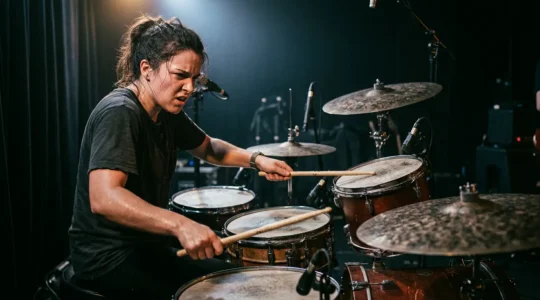
The biggest mistake drummers make is treating fills as a spotlight moment; the truth is that a great fill is a strategic production choice, not a technical showcase. Effective fills act as rhythmic punctuation that serves the song’s emotional arc….
Lire la suite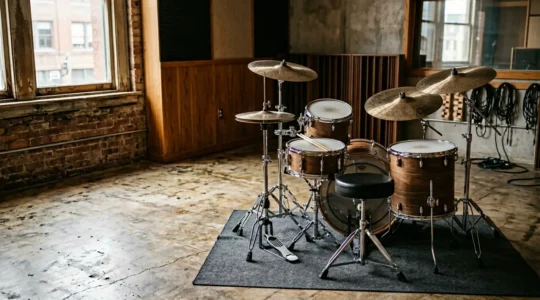
The biggest mistake in rock drumming is treating tuning as a musical task; it’s a mechanical engineering problem. Your goal isn’t a perfect note, it’s maximum acoustic output that carves its own space in a dense, loud mix. Controlling ring…
Lire la suite
Locking in with a drummer isn’t about following the kick drum; it’s about building a single, unified rhythmic engine with it. The power of a rhythm section comes from frequency summation—bass and kick drum notes hitting at the same time…
Lire la suite